
3 Season Room vs 4 Season Room – What’s the difference?
Three-Season Rooms vs. Four-Season Sunrooms: What’s the Difference?
It’s no secret that OpenSpace sunrooms are designed primarily for three-season use, and there’s a reason this category continues to grow in popularity. Homeowners want flexible outdoor spaces that feel open, comfortable, and easy to use. But how does a three-season room compare to a four-season sunroom? Let’s break it down.
Designing for three seasons doesn’t mean the space can’t be enjoyed in winter. Instead, it means the glass panels are non-insulated, which actually offers several advantages over fully insulated, four-season rooms.
1. Everyday Comfort and Usability
Four-season sunrooms are fully sealed and insulated, which can sound appealing at first. However, during warmer months, heat often builds up quickly. Without proper airflow, these rooms usually require dedicated heating and cooling systems to stay comfortable year-round.
OpenSpace three-season rooms are built with flexibility in mind. On warm days, the glass panels can be opened to allow fresh air to flow through. When temperatures drop or rain moves in, the panels close easily for protection. This design promotes natural ventilation and a more comfortable experience in changing weather.
Non-insulated glass also allows sunlight to naturally warm the space during fall, winter, and early spring. On sunny days, you can still enjoy your room—even in cooler weather—without relying on heavy climate control.
2. A Smarter Investment
Four-season rooms often come with a higher price tag due to structural modifications, insulation requirements, and additional permits.
OpenSpace three-season rooms offer a more cost-effective alternative while still delivering high-quality materials, thoughtful design, and long-term value. For many homeowners, this makes a three-season room a practical and worthwhile investment.
3. Energy-Efficient and Sustainable
OpenSpace rooms are designed to work with the environment, not against it. The ability to open or close the space based on the weather helps regulate temperature naturally and can reduce heating and cooling demands inside the home.
The retractable design also prevents overheating in warmer months, making it a more energy-conscious choice overall.
4. Clear, Unobstructed Views
Many four-season sunrooms rely on heavier framing, which can interrupt views of the outdoors.
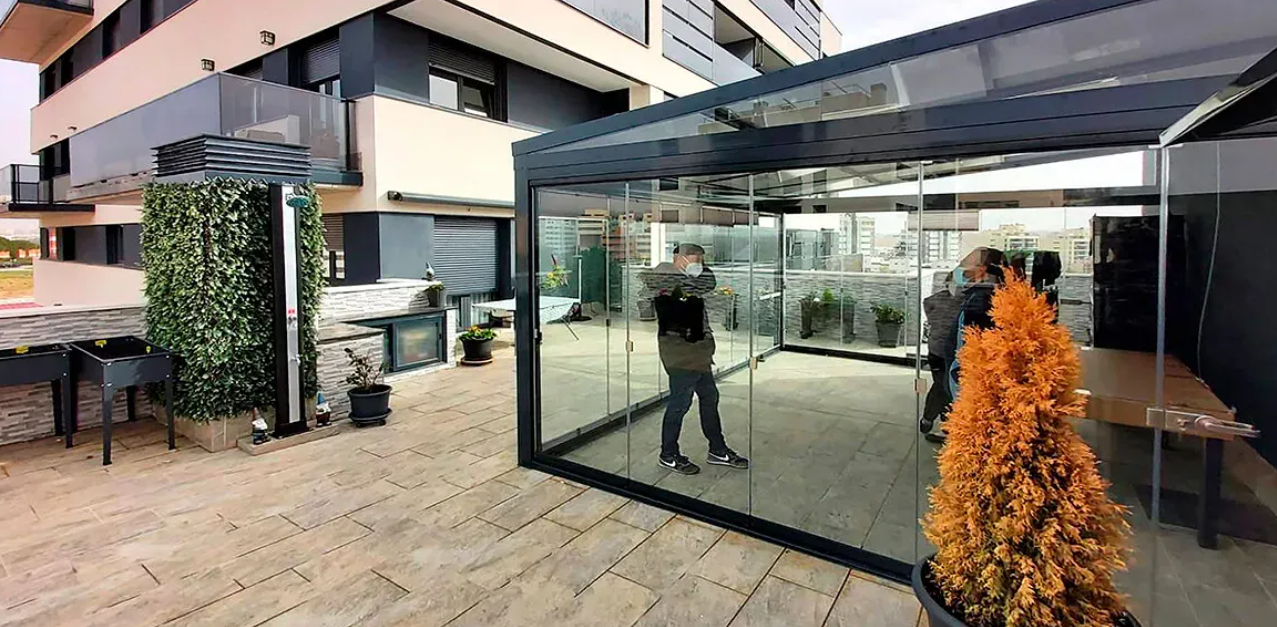
OpenSpace glass rooms feature sleek, minimal framing and smooth sliding panels that provide wide, uninterrupted views. Optional blinds can be added for privacy when needed. The clean, modern design enhances your home while keeping the focus on your surroundings.
With the option of a glass roof, you can even enjoy watching rain or snow fall above, perfect for relaxing moments year-round.
5. Extending Use into Winter
While OpenSpace rooms are designed for three-season use, simple additions like an infrared heater or thermal rug can make the space comfortable well into colder months—without turning it into a fully enclosed room.
Is a Three-Season Room Right for You?
For homeowners looking for flexibility, natural light, fresh air, and modern design, a three-season room is often the ideal solution.
Ready to start designing your own outdoor space? Book a free design consultation with an OpenSpace Design Consultant and bring your vision to life.
